Understanding the heart

From the moment it begins beating until the moment it stops, the human heart works tirelessly. In an average lifetime*, the heart beats more than two and a half billion times, without ever pausing to rest. Like a pumping machine, the heart provides the power needed for life. Understand how it works!

The coronary arteries

Arteries are vessels that carry blood away from the heart. The coronary arteries are the first blood vessels that branch off from the ascending aorta. Understand what they are and how they work!

Arterial Plaque

Clogged arteries result from a build-up of a substance called plaque on the inner walls of the arteries. Arterial plaque can reduce blood flow or, in some instances, block it altogether.

What is atherosclerosis?

Atherosclerosis (also known as arteriosclerotic vascular disease or ASVD) is a condition in which an artery wall thickens as a result of the accumulation of fatty materials such as cholesterol.

What is coronary heart disease?

Coronary heart disease is also known as coronary artery disease(CAD). Coronary heart disease is a major cause of illness and death.

Showing posts with label Heart Disease. Show all posts

Sunday, 11 March 2012

Coronary Heart Disease Prevention and Treatment

Prevention
The best way to prevent coronary heart disease are by monitoring and modifying certain risk factors and live with a healthy lifestyle at a young age.

You can’t change some risk factors such as age and family history but you can change the following risk factors :
  • High blood fats, the bad LDL , good Hdl and triglycerides
  • Diet
  • Smoking
  • Diabetes
  • High blood pressure
  • Obesity
  • Inactivity
  • Emotional stress
Self-care at Home

The most important ways to reduce the risk of heart disease is yourself and not the control of your health care provider. First way is to change your lifestyle . Lifestyle changes are the most effective way to prevent heart disease from getting worse or reducing the risk of getting heart disease.

Everyone should take the following measures to lower the risk of heart disease:
  1. Eat a heart-healthy diet
  2. Lower your fat intake
  3. Lower your blood cholesterol to a certain level , especially the LDL cholesterol
  4. Engage in regular exercise
  5. Quit smoking
  6. Control high blood pressure and diabetes
  7. Take a low-dose aspirin daily
  8. Eat 1 or 2 servings of fish or seafood each week
  9. Eat nuts that are rich in monounsaturated fats, such as hazelnuts, almonds, pecans, cashews, walnuts, and macadamia nuts(small amount)
  10. Cooking foods with garlic, which may have cholesterol-lowering effect
  11. Not more than 2 drinks of alcohol per day for men and 1 drink per day for women is recommended to raise the HDL 
Note: People who have liver or kidney problems, problems with alcohol abuse are not recommended to use alcohol

Medical Treatment

Aspirin
Aspirin will redice the risk of developing angina or heart attack by reducing the tendency of blood to clot
  • It reduces the chance that a clot will form in the coronary artery
  • There are some side effects of aspirin such as bleeding problems or ulcers
Calcium channel blockers
Calcium channel blockers causes the coronary artery to dilate which improves the flow of blood. They also reduce blood pressure and slows down the heart beat rate. Angiotensin-converting enzyme inhibitors a.k.a ACE inhibitors works by dilating the blood vessels .Thus increasing blood flow.

Beta- blockers
Beta-blockers will decrease your heart beat rate and blood pressure. Therefore reducing your heart oxygen demand.                                              

Nitroglycerin
This medication reduces angina , both by decreasing your heart’s oxygen demand and by dilating the coronary arteries, increasing the oxygen supply.

Statins
Statin drugs work by reducing the amount of cholesterol and other fats in your blood.
  • This will change the inner lining of the blood vessels so plaques are less likely to form
  • They slow down the progression of coronary heart disease
  • Examples of statins: atorvastatin(Lipitor),pravastatin(Pravachol), simvastatin(Zocor), lovastatin(Mevacor) and rosuvastatin(Crestor) 
Statin drugs
  

What is coronary heart disease(CHD)?

Coronary heart disease is also known as coronary artery disease(CAD). This disease is caused by the narrowing of the small blood vessels that supply blood and oxygen to the heart. It is a major cause of illness and death. 


 Coronary heart disease is generally caused by atherosclerosis - when plaque (cholesterol substances) accumulates on the artery walls, causing them to narrow, resulting in less blood flow to the heart. Sometimes a clot may form which can obstruct the flow of blood to heart muscle. Coronary heart disease commonly causes angina pectoris (chest pain), shortness of breath, heart attack (myocardial infarction) and other symptoms. 


 The coronary arteries are called so because they encircle the heart like a crown (corona in Latin means crown). 


Statistics
 According to the National Institutes of Health (NIH), USA, coronary heart disease is the leading cause of death for males and females in the USA. 17.6 million Americans were thought to have had the condition in 2006. It caused the death of over 425,000 people in the USA in 2006. 


 According to the National Health Service (NHS), UK, coronary heart disease causes the death of 1 in every 4 men and 1 in every 6 women in the United Kingdom - it is the UK's biggest killer. The risk of developing the disease increases with age. More males are affected than females.


References :
http://www.medicalnewstoday.com/articles/184130.php


Saturday, 10 March 2012

History of Coronary Heart Disease

Summary
Coronary heart disease, in the mid-twentieth century has become the most frequently occurring lethal disease.

Coronary vessels, that is, coronary arteries tend to develop atherosclerotic plaques already at an early stage. The onset and course of this development has often been a mute one, without pain, rendering thereby the recognition of coronary artery disease difficult – far into the twentieth century.

The many experiments and investigations performed during the “Renaissance” brought no results.

An exact description and depiction of damaged coronary vessels as primary cause of occluded coronary arteries became possible towards the beginning of the twentieth century only.
____________________________________________________________________________
The onset of knowledge on coronary heart disease cannot be precisely dated. Among the first to describe and work on coronary arteries were Leonardo da Vinci (1452–1519) as well as Andreas Vesal (1514–1564). Leonardo reports, the course of coronary arteries, leaving, however, many questions unanswered: all the more “as the coronary arteries are embedded in greasy material”. Vesal even thought that the coronary arteries would not be depict-able due to that very reason.

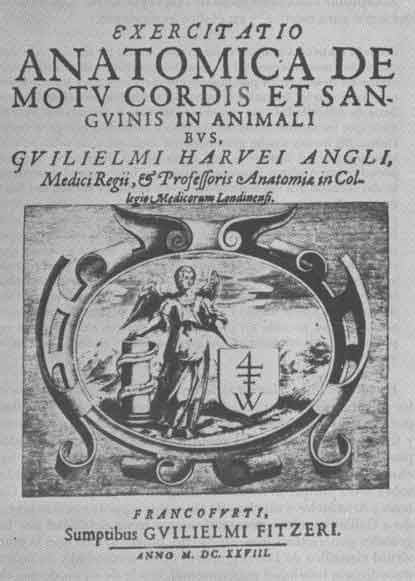
Of utmost importance was,  the discovery made one hundred years later of the closed circulation of blood by William Harvey (1628) (Exercitatio anatomica de motu cordis et sanguinis in animalibus). Harvey showed that the blood moves within a closed circuit from the right ventricle through the lung into the aorta, the peripheral vessels and back into the lung. 

William Harvey's publication, which helped tremendously in the discovery of  coronary heart disease
The anatomist Giovanni Battista Morgagni (1628–1771) can be given credit for his publication “The seats and causes of diseases investigated by anatomy” (Padua 1761). His work also included a description of anginal syndromes. Almost concomitantly, Friedrich Hoffmann (1660–1742), chief professor in cardiology of the newly founded University of Halle wrote “that the origins of coronary heart disease lie in the reduced passage of blood within the coronary arteries”.
Laennec's stethoscope
The French physician Nicolas Corvisart (1755– 1821), chief in cardiology at the Charité, Paris, worked, on the one hand, with organic lesions of the heart and the vessels. The invention of the stethoscope by R. T. H. Laennec (1781–1826), based on the direct auscultation performed for the first time by the latter, represented enormous progress and enabled further technical improvements in the 17th and 18th centuries.

The solution of diagnosis and treating angina pectoris concerned the minds of a number of physicians in the 18th and 19th centuries. The cardiologist William Heberden (1710–1801) was the first to exactly recognize and describe the disease in his publication “Some account of a disorder in the breast”; it appeared in the College of Physicians on July 20, 1768. He was, of course, unaware of many technical details, yet he perfectly knew that his work dealt with one of the most important diseases of the century.

Laennec also worked with angina pectoris; however, he thought that the course of the disease was altogether a harmless one. Many English, German, and Italian physicians, however, believed that angina pectoris was a disease of organic order caused by an impediment of the circulation within the coronary arteries.

The second half of the 19th as well as the beginning of the 20th century was marked by the appearance and life of the cardiologist William Osler (1849–1919). He worked extensively with angina pectoris as reflected in the paper “Lectures on angina pectoris and allied states”. He did not think angina pectoris to be a disease, but rather a syndrome. He gives credit to Morgagni for having described angina pectoris first. Osler himself depicted the coronary vessels at great length, as well as coronary sclerosis, embolies, thrombi and cardiac sudden death – his famous saying was “it begins where other diseases end – in death.”

The American cardiologist James B. Herrick (1861–1954) made an important contribution to the analysis of coronary sclerosis in the paper “Clinical features of certain obstructions of the coronary arteries”. He concluded in 1912 that “a slow, gradual narrowing of coronary vessels is a possible cause, permitting the heart to adapt to the new conditions, and that a severe obstruction of a vessel must not necessarily lead to death”. He brought this theory to Europe in 1918, propagating it widely; he also created the term “ heart attack”. Herrick described in 1918 the electrocardiographic changes after ligation of the coronary vessels. Historians disagree as to how long the term “coronary heart disease” had already existed. According to the English cardiologist MacMichael (1966), a relevant reference had not been made before the 18th century.

The first coronary heart catheterization was performed in 1929 by Werner Forssmann in his famous “self-experiment”. Forssmann worked with a catheter for bladders, Charrière 4, which he introduced approx. 65 cm deep into the right auricle, applying the jugular vein. His achievement was scarcley noticed so that Forssmann abandoned the idea of catheterization.
Coronary cathetherization
The lung specialist André Cournand, however, was fascinated by the procedure: together with the cardio- logic pediatrician Dickinson Richards, he successfully repeated in 1941 the trial of Forssmann. The catheter was pushed into the right auricle; by 1942, they were able to push it further and place it into the right ventricle. The rapid development of angiography in the early 1950s led to the ardent wish for a depiction of coronary arteries by means of intervention. Contrast material was injected into the aorta by the supra-angiographic route, flowing from there into the coronary vessels, resulting, however, quite often in an insufficient filling of contrast material.

Mason Sones, father of coronary angiography
Mason Sones (1918–1985), a cardiologic pediatrician, solved the problem: in performing an angiogram following the well-known technique on a 26 year-old man, the catheter slipped inadvertently from the aorta into the right coronary artery. By this, all contrast material was injected and went into the right coronary artery instead of the aorta. Monitoring of catheterization was not known at that time, yet the mishap of the wrongly performed injection remained without consequences, no damage was observed. Mason Sones immediately grasped the important consequence of the situation: he replaced supraaortic injections by selective coronary angiography, that is, by injecting smaller amounts of contrast medium into the relevant coronary vessel. This was a breakthrough, and the technique became a routine procedure in the Cleveland Clinic in 1959.

The radiologist Melvin Judkins introduced a further simplification in 1967, performing angiography by way of the femoral artery; he thus avoided opening the brachial artery. Of great consequence and importance was the move of Andreas Grüntzig from Heidelberg to the University Clinic of Zurich in 1964. He came as a student, worked as an assistant and after terminating his studies in internal medicine, he became a resident in cardiology at the University Hospital in Zurich. His aim was to repeat the re-opening of occluded peripheral arteries which was first successfully performed by Charles Dotter in 1964. After several years of experimental work, Grüntzig managed to successfully dilate a severe stenosis of the ramus interventricularis anterior in a 38-year-old patient suffering from severe angina pectoris. This was achieved at the University Clinic of Zurich on September 16, 1977. After the intervention, the patient found himself free of pain; the control 4 weeks after dilatation showed no disturbance. Grüntzig’s dilatation was thereafter thought to be a success and became the method of choice to avoid cardiac surgery.

 
In 1978, at the Sessions of the American Heart Association in New York, Grüntzig presented the results of the first 26 dilated patients; by April 1979 the method had been performed in 60 patients: in 41 of them, the graft had remained open. In 1977, balloon dilatation of coronary vessels had undergone great acceptance, especially since the introduction of much more efficient catheter systems.

According to the radiologist Harold Baltaxe, coronary angiography had become a routinely and widely applied method as early as 1971, approx. 10 years after its introduction. Bruce Fye, medical history professor at the University of Wisconsin was of the opinion that coronary angiography had considerably altered the profession in cardiology – a situation similar to that of electrocardiography some 50 years earlier.

As was to be expected, the introduction of coronary angiography as well as of balloon dilatation was markedly delayed in Europe. The first coronary angiography took place in 1965, that is, 6 years after the onset of selective coronary angiography; it was performed at the University Hospital in Zurich by the author of this report. It needed yet a number of years for the method to be generally accepted. The same is true for balloon dilatation of Andreas Grüntzig. Development of this method was slow, and Grüntzig had much more and also much sooner great success in the United States (Atlanta).

References :

Video : Coronary heart disease

Skip the long posts and watch the video for an easier understanding of coronary heart disease!


Video : What is a heart attack?

Sunday, 4 March 2012

Symptoms of Coronary Heart Disease

Different people experience different symptoms. In some cases, people may not have symptoms of coronary heart disease (CHD) at all before they are diagnosed.

Angina
Chest pain or discomfort (angina) is the most common symptom. You feel this pain when the heart is not getting enough blood or oxygen. How bad the pain is varies from person to person.

It can be a mild, uncomfortable feeling that is similar to indigestion. However, a severe angina attack may feel heavy or like someone is squeezing your heart. You usually feel it in the centre of the chest, but the feeling may also spread to the arms, neck, jaw, back or stomach.

Angina is often triggered by physical activity or stressful situations. The symptoms usually pass in less than 10 minutes and can be relieved by resting or using a nitrate tablet or spray.

Heart Attacks
Figure A shows a heart with dead heart muscle caused by a heart attack. Figure B is a cross-section of a coronary artery with plaque buildup and a blood clot.  
Figure A shows a heart with dead heart muscle caused by a heart attack. Figure B is a cross-section of a coronary artery with plaque buildup and a blood clot. - http://www.nhlbi.nih.gov/health/health-topics/topics/heartattack/

A heart attack occurs if the flow of oxygen-rich blood to a section of heart muscle suddenly becomes blocked. If blood flow isn't restored quickly, the section of heart muscle begins to die. And if not treated immediately, it may be fatal.

The discomfort or pain of a heart attack is similar to that of angina but it is often more severe. During a heart attack you may also experience the following symptoms:
  • sweating
  • light-headedness
  • nausea
  • breathlessness
The symptoms of a heart attack can be similar to indigestion. For example, they may include a feeling of heaviness in your chest, a stomach ache or heartburn. A heart attack can happen at any time, including while you are resting. If heart pains last longer than 15 minutes, it may be the start of a heart attack.
Unlike angina, the symptoms of a heart attack are not usually relieved using a nitrate tablet or spray.

Heart Failure
Heart failure can occur in people with CHD. The heart becomes too weak to pump blood around the body, which can cause fluid to build up in the lungs, making it increasingly difficult to breathe. Heart failure can happen suddenly (acute heart failure) or gradually, over time (chronic heart failure).
____________________________________________________________________________

Signs to decide when to seek Medical Care:
  • Chest pain, pressure or feeling of indigestion after physical exertion, which may or may not be relieved by rest 
  • Shoulder or arm pain involving left, right, or both sides during physical or mentally stressful activity 
  • Jaw pain, unexplained by another cause, like a sore tooth 
  • Shortness of breath after exertion or walking uphill 
  • Fainting spell 
  • Pain in the upper part of your abdomen 
  • Unexplained nausea vomiting, or sweating
  • Palpitations or dizziness

Sources : 
http://www.nhs.uk/Conditions/Coronary-heart-disease/Pages/Symptoms.aspx
http://health.nytimes.com/health/guides/disease/coronary-heart-disease/overview.html
http://www.nhlbi.nih.gov/health/health-topics/topics/heartattack/

Coronary Heart Disease and Its Causes

Heart disease and diseases of the pulmonary system is one of the ten most common causes of death in Ministry of Health hospitals in 2007, accounting for 16.49% of those who died in government hospitals, according to the WHO Western Pacific Region.

Coronary heart disease(CHD) also known as coronary artery disease affects approximately 15 million men and women  in the United States. As year goes by , an increasing amount of people are affected with this disease due to bad eating habits.

This disease develops when a fatty material, calcium, and plaque combines and builds up in the arteries that supply the heart with blood. Through this artery which is the coronary artery, the heart muscles (myocardium) gets the oxygen and other nutrients it needs to pump blood. The plaque often narrows the artery so that the heart does not get enough oxygen and nutrient-rich blood. 

A risk factor for heart disease is something that increases your chance of getting it. Some risk factors can be prevented but there are also come that cannot be changed. 

The risk factors that cannot be changed are :
  • Your age. The risk of heart disease increases with age.
  • Your gender. Men have a higher risk of getting heart disease than women who are still getting their menstrual period. After menopause, the risk for women is closer to the risk for men.
  • Your genes. If your parents or other close relatives had heart disease, you have a higher risk.
  • Your race. African Americans, Mexican Americans, American Indians, Hawaiians, and some Asian Americans also have a higher risk for heart problems.
Many things increase your risk for heart disease: 
Diabetes
  • Adults with diabetes are two to four times more likely to have heart disease or suffer a stroke than
    people without diabetes.
  • High blood glucose in adults with diabetes increases the risk for heart attack, stroke, angina, and
    coronary artery disease.
  • People with type 2 diabetes also have high rates of high blood pressure, lipid problems, and obesity,
    which contribute to their high rates of CVD. 
High blood pressure 
  • It increases your risks of heart disease and heart failure as it puts a strain on the heart.  
  • It also increases the risk of coronary disease, heart attack, kidney failure and angina. 
  • Hypertension combined with obesity, smoking, high cholesterol or diabetes increases the risk of a heart attack by several times.
Cholesterol
  • If cholesterol is too high, it builds up in the walls of your arteries(blood vessels). Over time, this buildup (called plaque) causes hardening of the arteries (atherosclerosis). 
  • Atherosclerosis causes arteries to become narrowed, slowing blood flow to the heart. Reduced blood flow to the heart can result in angina (chest pain) or in a myocardial infarction (heart attack) in cases when a blood vessel is blocked completely.
Smoking
  • Smoking puts a strain on the heart by making it work faster.
  • It also increases a smoker's risk of blood clots.
  • The toxins in cigarette smoke cause plaques to form in the arteries, which leads to atherosclerosis, otherwise known as hardening of the arteries.
Chronic kidney disease
  • CKD and cardiovascular disease share two major risk factors -- diabetes and high blood pressure. Both can damage the blood vessels in the kidney, preventing it from properly eliminating fluid from the body. Excess fluid contributes to higher blood pressure, which leads to more blood-vessel damage -- a continuing cycle of damage.
  • CKD patients are also prone to anemia, which is a lowering of the blood's red cell count. Prolonged anemia can cause the heart to develop a left ventricular hypertrophy, which means the muscle on the left side of the heart becomes abnormally thick. This can lead to congestive heart failure. 
Alcoholism
Alcoholism and Alcohol Abuse 300x200 Effects of Alcoholism and Alcohol Abuse
  • It raises blood pressure, causes heart disorders and leads to a heart attack.
Being overweight
  • Overweight people, especially with excess fat around the waist have an increased risk of heart disease and heart attack, even without the other risk factors. 
  • Excessive weight gain increases the activity of the heart, reducing blood pressure, cholesterol and triglyceride levels and decreases “good” cholesterol. 
  • Excess weight also increases the risk of diabetes.
Not getting enough exercise, and feeling depressed or having excess stress are other risk factors.

70% of Malaysians Suffer FromNon-Communicable Disease, also known as NCD, such as hypertension, diabetes, obesity and high cholesterol, which are all risk factors for heart disease.

(as reported by the Heart Foundation of Malaysia)
Sources :
http://www.nhs.uk/Conditions/Coronary-heart-disease/Pages/Causes.aspx
http://health.nytimes.com/health/guides/disease/coronary-heart-disease/overview.html